
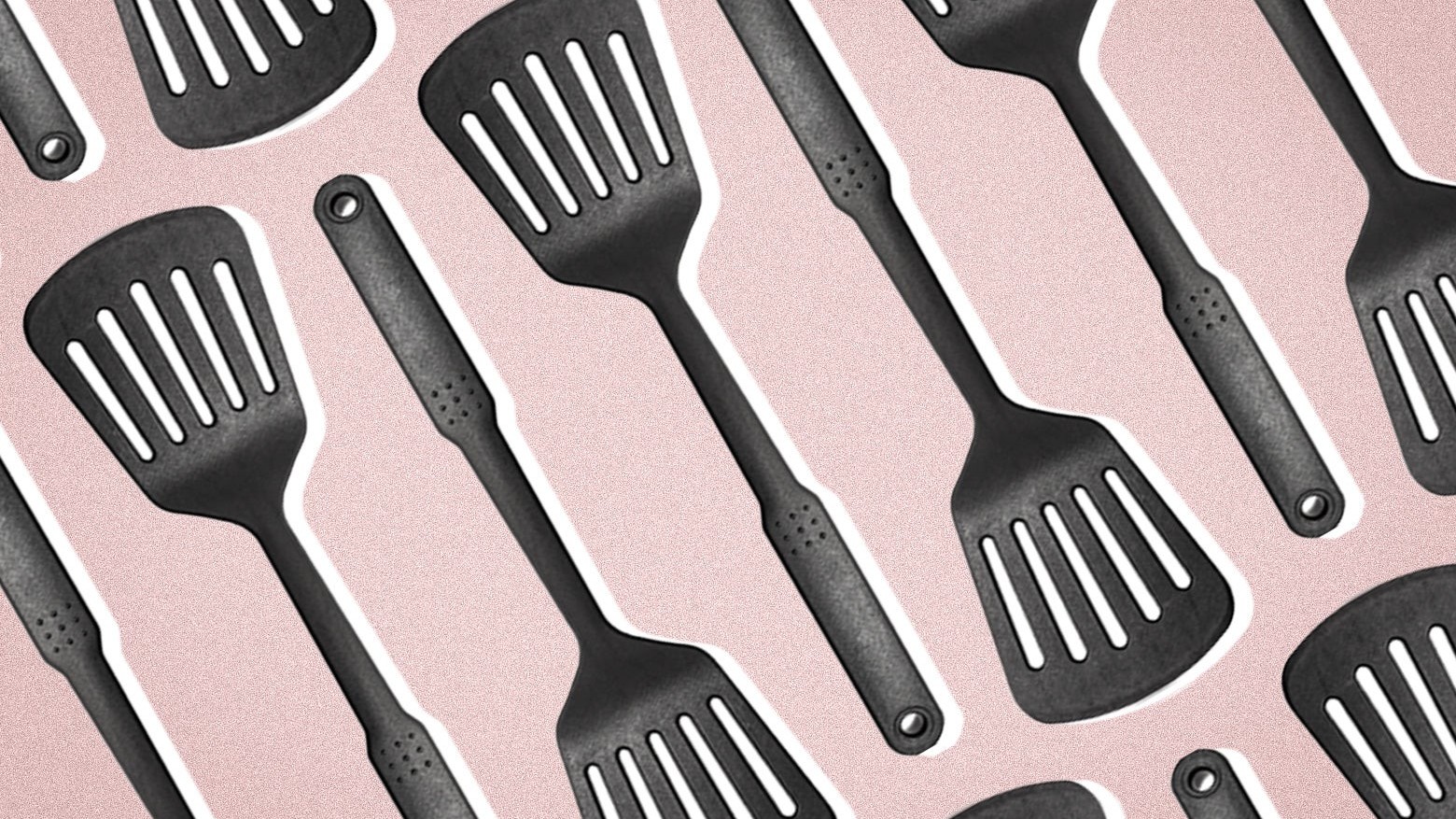
That black spatula has probably been in your kitchen drawer for years. Cheap, flexible, unkillable, the kind of thing you grab without thinking every single night to stir pasta, flip eggs, scrape the last of a sauce from the bottom of a hot pan. Nobody reads the ingredient list on a spatula. But maybe they should.
A landmark study published in October 2024 in the journal Chemosphere, led by scientists from Toxic-Free Future and Vrije Universiteit Amsterdam, changed how a lot of people look at their kitchen drawer. Toxic flame retardant chemicals were found in 85% of analyzed black plastic products, with total concentrations ranging up to 22,800 ppm, including the banned substance deca-BDE and its replacements, such as 2,4,6-tribromophenol, which was also recently detected in breast milk. The highest-contaminated item in the entire analysis? A spatula.
Key takeaways
- A scientific study tested black kitchen utensils and discovered something alarming hiding in your drawer
- The banned chemical deca-BDE was found at levels up to 1,200 times higher than legally allowed
- Heat, oil, and acid create the perfect conditions for toxins to migrate from plastic directly into your dinner
Your Old TV Is Now Stirring Your Dinner
The origin story here is stranger than the headline suggests. Flame retardants and other chemicals end up in some black plastic cookware products made from plastic recycled from electronic products that contained them. Think about that for a second: the same material that housed your old laptop keyboard or TV casing gets melted down, recolored with carbon black pigment, and remolded into the utensil you’re using to stir your bolognese tonight.
Although existing safety regulations limit the amounts of these chemicals and metals present in electronics, there are currently no government regulations covering the safety of recycled black plastic items. Therefore, high levels of toxic chemicals that are prohibited in your laptop or phone are perfectly legal in your black plastic spatula. That regulatory gap is the core of the problem, and it’s been hiding in plain sight for years.
Despite restrictions, decaBDE was found in 70% of the samples tested, at levels ranging from five to 1,200 times greater than the European Union’s limit of 10 parts per million. The EPA had moved to phase it out back in 2021. The ban, however, does not apply to recycled plastics, so some cookware may still contain the chemical.
Heat Is the Accelerant
The chemistry here isn’t complicated. Heat, oil, and acid all help chemicals migrate from plastic into food. A spatula in a hot pan checks every box. Stirring pasta water at a rolling boil, scraping a searing-hot cast iron, leaving a spatula resting across the rim of a simmering pot, these are exactly the conditions that maximize leaching.
Exposure to these toxic substances could harm the reproductive, neurological and immune systems, and is associated with health harms such as thyroid disease, diabetes and cancer. The PBDE class of flame retardants is particularly concerning on the long-term exposure front. A study published in JAMA Network Open in April 2024 measured PBDE flame-retardant levels in Americans’ blood, then checked death records years later. People with the highest levels had about a 300% higher risk of dying from cancer than those with the lowest.
Black nylon spatulas carry their own separate concern beyond recycled e-waste. When exposed to high temperatures, harmful toxic chemicals such as melamine and formaldehyde can leach from nylon utensils into food. A study published in PLOS ONE in July 2016 examined the migration of various chemicals from polyamide utensils into foods and found some transference, mostly in foods containing alcohol, which matters if you’re one of the many cooks who deglazes a pan with wine as a matter of habit.
The Nuance That Gets Lost in the Panic
Here’s where it gets more honest. Not every sample in the study contained high levels of flame retardants. Some contained very low levels, or even none at all. The distribution was highly uneven, and several researchers have pointed out that the risk depends heavily on which specific product you own, how often you use it, and at what temperatures. The problem is, it’s impossible to tell just by looking at the label of the utensil or product, as there are no warnings.
That’s the genuinely maddening part. You cannot see, smell, or taste flame retardants migrating into your food. “What our study shows is that when harmful chemicals like flame retardants are allowed to be intentionally used in products like televisions and other electronics, they can be recycled and unintentionally contaminate other products downstream,” explained Megan Liu, a co-author of the Chemosphere study. The consumer carries the risk of a systemic failure they had no part in creating.
The counter-argument, pushed by some epidemiologists, is that the doses most people realistically encounter are low enough to be negligible in everyday use. The most recent study does make distinctions in the risk posed by kitchen goods made from different types of recycled plastic, with products made from acrylonitrile butadiene styrene (ABS) seeing much higher rates of flame retardant contamination than products made from nylon. In other terms: not all black plastic is identical, and a cheaply-made spatula manufactured from recycled ABS plastic is a different object than a food-grade nylon version, even if they look exactly the same on the shelf.
What to Use Instead (And What Actually Works)
The swap is cheap and takes ten minutes. Stainless steel and wood are cheap, durable, and chemical-free for cooking utensils. A flat wooden spatula handles pasta and sautéed vegetables without issue. A thin stainless steel fish spatula is better at the real technical work, flipping proteins cleanly, scraping fond, than any plastic version ever was. Food-grade silicone occupies a solid middle ground for nonstick surfaces, where metal risks scratching the coating.
Plastic spatulas and nylon utensils can release toxic fumes if accidentally left on a hot surface, and over time these cooking tools degrade, increasing the risk of ingesting microplastics. That slow degradation is worth taking seriously: a spatula you’ve used for three years, with micro-scratches and heat stress across the blade, is not the same object it was when you bought it. The structural breakdown is visible if you look closely. The chemical release is not.
Avoid microwaving food in black plastic of any kind. If you purchase food in a black plastic container, transfer it to a glass, ceramic, or metal storage container when you get it home. The spatula question is actually the easy fix. The harder habit to break is the reflexive reuse of black plastic takeout trays for leftovers, research shows that takeout containers and other plastic kitchenware can also leach potentially dangerous chemicals into your food, especially when they’re exposed to heat.
One detail almost nobody mentions: the black pigment itself, carbon black, is classified by the International Agency for Research on Cancer as a possible human carcinogen. It’s not the only reason to reconsider the color, but it adds a layer to a conversation that’s usually focused entirely on flame retardants. The spatula was never just a spatula.
Sources : toxicfreefuture.org | cnn.com