
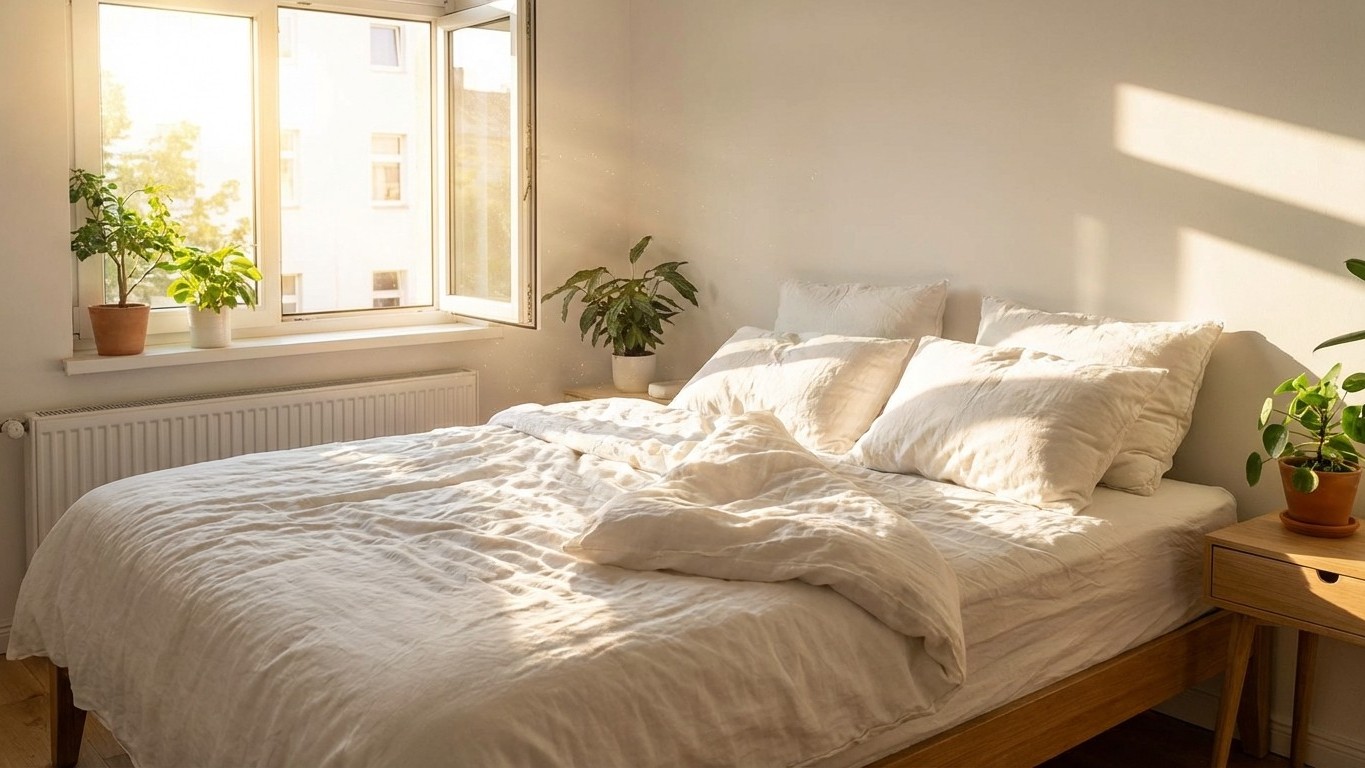
For decades, Making your bed has been hailed as the ultimate morning habit—a symbol of discipline, productivity, and good hygiene. From military training to parenting guides, This Simple Ritual has been championed as the foundation of an organized life. But what if this cherished daily routine is actually-do-with-it”>actually-makes-you-look-younger”>Actually-makes-you-look-younger”>Actually-makes-you-look-younger”>Actually working against your health?
Recent research has uncovered a surprising truth that challenges everything“>everything we’ve been taught about bed-making. A made bed traps moisture and warmth From the night’s sleep—conditions that dust mites, which feed on dead skin cells, need to thrive. When the bed is left open and exposed to circulating air, those conditions evaporate. This revelation has led allergists and environmental health specialists to reconsider one of our most ingrained morning habits.
The hidden Allergen Army in Your Bedroom
Up to 1.5 million dust mites can live in a single bed, feeding on dead skin and thriving in warm, humid conditions. That’s pretty gross, but for most of us It’s Not really an issue, as we’ll never notice our tiny cohabitors. However, for the estimated up to 50 percent of people who are allergic to dust mites, these microscopic creatures represent a serious health concern.
People who are allergic to dust or dust mites are reacting to inhaling proteins in dust that comes from dust mite feces, urine or decaying bodies. Any swelling (also called inflammation) of the nasal passages caused by dust mites is considered a dust allergy. The symptoms can range from mild morning sniffles to severe respiratory distress. A mild case of dust mite allergy may cause a runny nose, watery eyes and sneezing. An ongoing dust mite allergy can cause repeated sneezing and coughing; stuffy nose; and facial pressure.
What makes this particularly problematic is the timing. Symptoms are more likely to occur while sleeping at night and early in the morning on waking up because the dust mites inhabit the pillows, bedcovers, mattresses, and blankets. This means your morning bed-making routine could be stirring up allergens right when your body is most vulnerable.
The Science Behind the Unmade Bed
The groundbreaking research came from Kingston University, where researchers found that the bugs thrive in warm, moist environments but die in dry surroundings. They stated that by making your bed Every Morning, you could be cultivating a humid habitat for the bugs. In theory, they said, leaving your blankets and sheets off could help kill them, leading to fewer asthma and allergy triggers.
Dr. Stephen Pretlove, the lead researcher, explained the mechanism: “We know that mites can only survive by taking in water from the atmosphere using small glands on the outside of their body. Something as simple as leaving a bed unmade during the day can remove moisture from the sheets and mattress so the mites will dehydrate and eventually die.”
The typical adult loses about a liter of fluid each night through sweat and respiration. Combine that with thick comforters, insulated bedrooms, and limited morning ventilation, and the bed becomes a microclimate tailor-made for mite colonies. When you immediately pull up those covers and tuck in those sheets, you’re essentially creating a greenhouse effect that dust mites adore.
What Allergists Really Recommend
While the unmade bed research has caught attention, allergy experts offer nuanced advice. “When making your bed, you do shake the mites and their fecal matter in the air. So if you were to do an air test immediately after making the bed, it would show higher levels of dust mites until they settle.” But not making the bed doesn’t do anything to eliminate the existing mite population.
The key insight isn’t to abandon bed-making entirely, but to time it strategically. Try to leave your bed unmade for at least 30 minutes after you wake up to allow moisture to evaporate and fresh air to circulate. If you don’t want to spend all day staring at a messy bed cleaning experts recommend waiting at least an hour before you make it.
For those serious about reducing dust mite exposure, allergists recommend several evidence-based strategies. “If you can get your humidity down below 50 percent — ideally between 35 to 40 percent — that is going to destroy the mite populations.” Use a hygrometer to measure the humidity in your house, and then use a dehumidifier when it gets too high. Additionally, washing bedding weekly in hot water (at least 120 degrees F) and using allergen-proof mattress covers can make a significant difference.
Rethinking Morning Routines for Better Health
This research challenges us to reconsider other “healthy” habits that might have unintended consequences. The morning bed-making ritual, so deeply ingrained in our culture, turns out to be more complex than we imagined. All sorts of practitioners, including allergists and environmental health specialists, are recommending leaving your bed unmade for several hours after you wake up to allow your bedding to breathe.
For the millions of Americans who struggle with allergies and asthma, this simple change could provide meaningful relief. For people with existing allergies, asthma, or other respiratory issues, reducing dust mites is particularly important. Since these allergens often accumulate in bedding, pillows, and mattresses, airing out your bed can significantly reduce your exposure to dust mites, helping to create a healthier sleeping environment.
The next time you feel guilty about leaving your bed unmade, remember that you might actually be doing your respiratory system a favor. Leaving your bed unmade might feel counterintuitive, but it’s a simple habit that can promote a healthier sleeping environment. By letting your mattress breathe, you’re reducing the likelihood of dust mite buildup and ensuring a fresher, more hygienic sleep atmosphere. Sometimes the healthiest choice isn’t the most visually appealing one—and that’s perfectly okay.