
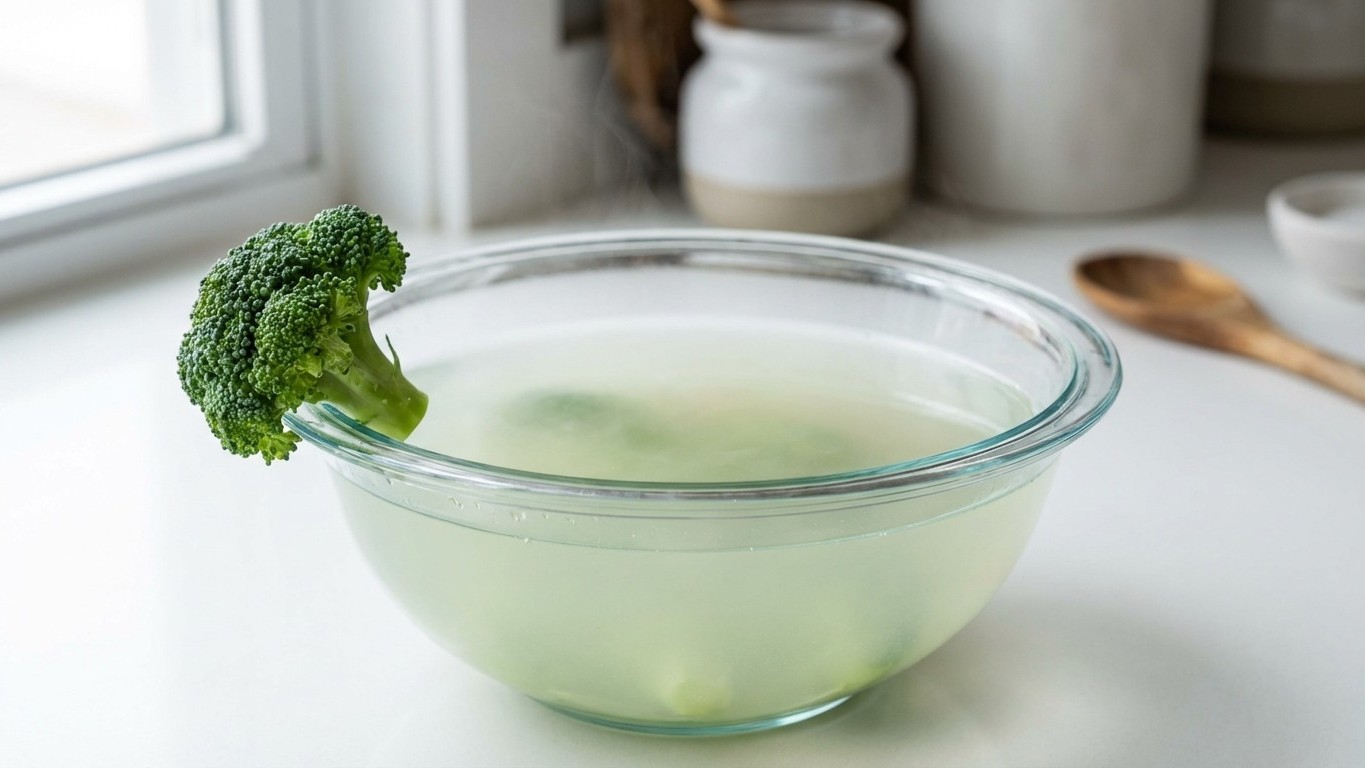
That cloudy, slightly greenish water left in the pot after boiling broccoli or green beans. Most of us do it without a second thought, a quick tilt of the pot, a gurgling sound, and it disappears down the drain. Completely gone, along with Everything it was quietly carrying. A conversation with a nutritionist friend changed that reflex for me permanently, and the science behind it is hard to ignore once you’ve seen it.
Key takeaways
- Up to 60-70% of key minerals like potassium and magnesium migrate into vegetable cooking water during boiling
- Water-soluble vitamins C and B vitamins don’t disappear—they’re suspended in the liquid waiting to be consumed
- Simple kitchen techniques can capture these ‘lost’ nutrients for soups, grains, and sauces
The Liquid You’re Literally Throwing Away
“Boiling vegetables causes water-soluble vitamins like vitamin C, B1, and folate to leach into the water,” as nutrition experts have long noted, and studies have confirmed for years that the process actively leaches nutrients into the cooking liquid. What sits in that pot after your carrots or spinach are done isn’t just flavored water. Some of the key nutrients found in vegetable cooking water include vitamin C, vitamin K, folate, and potassium — and the water may also contain beneficial compounds like polyphenols and carotenoids, which have anti-inflammatory and antioxidant properties.
The numbers, when you actually look at them, are striking. The most affected vitamins during boiling include folate, which can end up with only 40% retention in the vegetable itself, and thiamin, with retention ranging from just 20 to 80% depending on conditions. Boiling and cooking vegetables in high temperatures or in water can decrease nutrient levels significantly, water-soluble vitamins like vitamin C and B vitamins are often lost during these cooking methods, and minerals like potassium, phosphorus, calcium, magnesium, iron, and zinc may be reduced by up to 60–70%. That’s not a marginal loss. That’s the majority of what you were cooking for, quietly pooling at the bottom of your pot.
Water-soluble vitamins (C and many of the B vitamins) are the most unstable nutrients when it comes to cooking because they leach out of vegetables into the cooking water. The mechanism is almost poetic in its irony: the very act of cooking, which makes many vegetables easier to digest, simultaneously sends a significant portion of their micronutrients into the surrounding liquid.
What the Science Actually Says About “Lost” Nutrients
Here’s the part most people miss, and where the counter-intuitive truth lives: “lost” doesn’t mean destroyed. The cooking water leeches off water-soluble fiber and vitamins, leaving you with nutrient-rich water. The vitamins didn’t vanish, they migrated. As long as you consume that cooking liquid, say in a tasty soup or sauce, you can get all those nutrients back.
Water-soluble vitamins C and many of the B vitamins are the most unstable nutrients when it comes to cooking because they leach out of vegetables into the cooking water. Avoiding soaking vegetables, using the least amount of water when cooking, and using other cooking methods such as steaming or roasting are ideal, but if you have cooking water left over, using it in soups or gravies captures all the leached nutrients. The conclusion from food scientists is consistent: the water isn’t waste. It’s a secondary broth.
In comparison to raw vegetables, boiled vegetables significantly lose minerals like potassium, magnesium, zinc, copper, and manganese, and every single one of those ends up suspended in your cooking water. Think about that the next time you boil a pot of spinach or green beans.
There’s also a nuance worth knowing about specific vegetables. One exception is carrots: boiling and steaming actually increase levels of beta carotene. Although cooking tomatoes reduces their vitamin C content by 29%, their lycopene content increases by more than 50% within 30 minutes of cooking. The relationship between heat, water, and nutrients is far more complex than the blanket “raw is always better” narrative most of us absorbed somewhere along the way.
How to Actually Use Vegetable Cooking Water
The practical pivot here is simple, and it costs nothing. Vegetable cooking water can be used as a cooking liquid for grains, such as rice or quinoa, to add extra nutrients and flavor. The result is a subtle depth of flavor, slightly earthy, faintly savory, that transforms an otherwise plain side dish into something with actual character. French home cooks have been doing this instinctively for generations, calling it the “fond” of the pot.
Leafy green vegetables such as spinach, kale, and collard greens are packed with vitamins and minerals that are easily extracted into the cooking water. Carrots, sweet potatoes, and tomatoes are also rich in nutrients and add a boost of vitamins and minerals to the cooking water. Cruciferous vegetables like broccoli, cauliflower, and cabbage contain glucosinolates, which have been shown to have anti-inflammatory and antioxidant properties.
A few practical things worth keeping in mind:
- Use the least amount of water possible when boiling, using minimal cooking water and cooking for shorter time periods should result in higher vitamin C retention in the vegetable itself, with less leaching overall.
- You can minimize the leaching by using less water and cutting vegetables into larger chunks for less exposed surface area.
- Drink or use vegetable cooking water immediately after cooking, while the nutrients are still active, or store it in the refrigerator for later use, consuming it within a day or two.
- Consider the vegetable: steaming is one of the best cooking methods for preserving nutrients, including water-soluble vitamins, which are sensitive to heat and water.
A Smarter Way to Think About Your Kitchen
The reflexive pour-down-the-drain habit is, at its core, a food waste issue dressed up as a cooking habit. Boiling, while a gentler process, often results in the leaching of water-soluble vitamins and minerals into cooking water, leading to substantial nutrient loss, especially when the water is discarded. The fix isn’t complicated. It’s a jar on the counter, a ladle into the soup pot, a cup of vegetable broth used instead of plain water to deglaze a pan.
While heating vegetables can degrade some vitamins, like vitamins B and C, it can enhance the digestibility and absorption of others like A, D, E, and K. The whole picture is messier, more interesting, and more forgiving than the clean “boiling destroys nutrients” headline would suggest. Unless you’re going to drink the water along with your vegetables, such as when making soups and stews, these vitamins are typically poured down the sink, which, now that you know what’s in there, sounds a lot more like a choice than an accident.
Which raises the real question: what other kitchen reflexes are quietly costing you more than you think?
Sources : sciencedirect.com | pmc.ncbi.nlm.nih.gov