
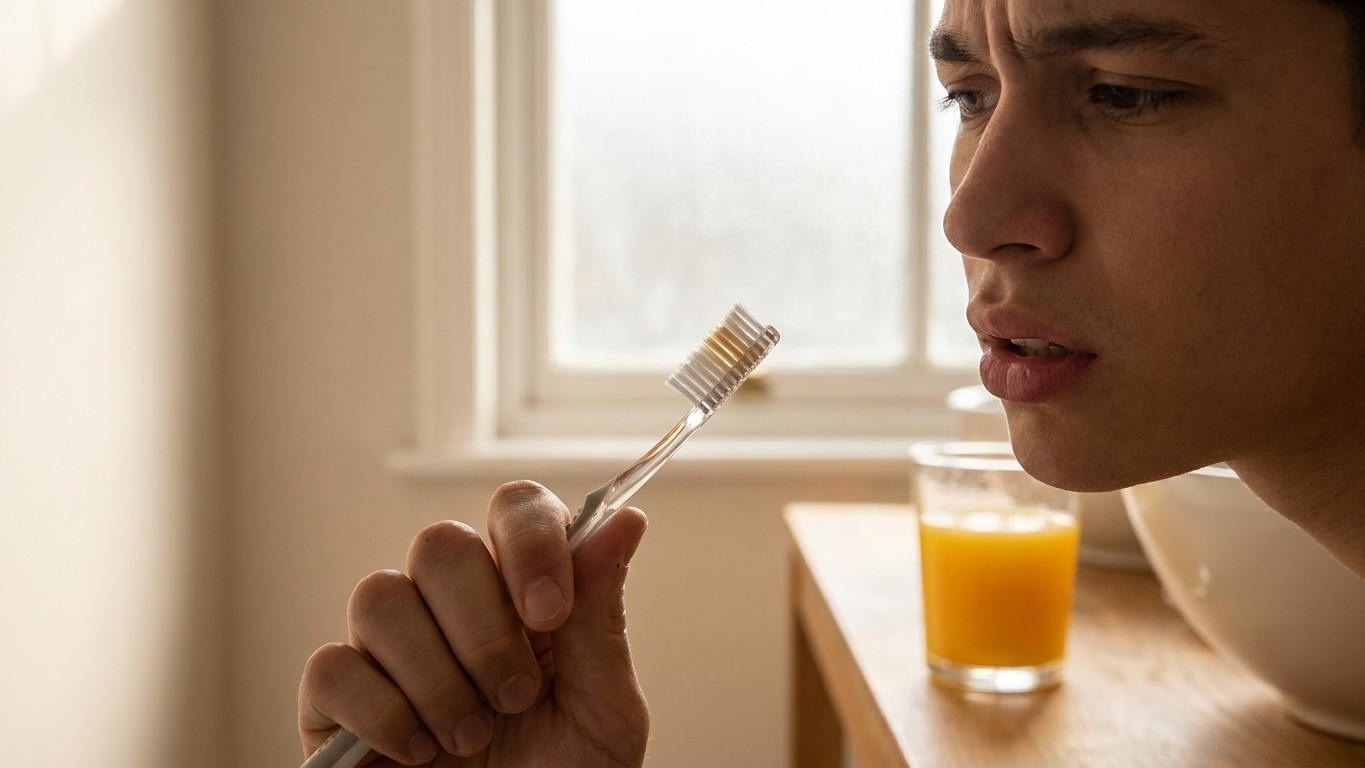
The dentist’s chair confession is almost a rite of passage: “So you brush right after your orange juice in the morning?” Yes, obviously, that’s what a responsible adult does. Except that enthusiastic scrubbing, done within minutes of citrus, is quietly working against the very enamel it’s supposed to protect.
Here’s the mechanism nobody explains at the breakfast table. Every time you eat or drink something acidic, your mouth goes through what’s known as an acid attack, and the pH in your mouth drops, with the acidic environment starting to weaken or soften the outer enamel that protects your teeth. Orange juice, however healthy it looks in its little glass, sits well below the neutral pH of saliva. The enamel doesn’t dissolve instantly, but it does go soft, like chalk left out in the rain for a minute. That’s the state your toothbrush meets it in if you rush straight from the glass to the sink.
Key takeaways
- Your toothbrush is sanding down enamel that’s been softened by acid—and that damage never grows back
- Saliva has a hidden superpower that most people interrupt by brushing too soon
- One tiny timing change eliminates the entire problem without sacrificing your morning ritual
The Softened-Enamel Trap
A toothbrush loaded with paste feels harmless. It isn’t, not in that particular window. Dentists recommend holding off on brushing after consuming anything acidic, whether it’s fruit, soda, juice, or sour candy, because acids weaken the outer layer of the tooth called the enamel. Scrubbing a softened surface doesn’t clean it so much as sand it down, fraction by fraction, morning after morning.
The comparison one dentist used stuck with me more than any textbook diagram: it’s like sanding a soft surface, it doesn’t take much to cause damage. And unlike a scuffed floor, tooth enamel doesn’t grow back. Tooth erosion is permanent. Once the outer layer thins, it exposes the softer, more vulnerable dentin layer underneath, which increases the risk of cavities. That’s the part that made me put the toothbrush down mid-motion during my next OJ morning. Sensitivity to cold water, a slightly duller shade at the edges of the front teeth, none of it happens overnight, but it accumulates the way any small daily habit does.
Why Saliva Deserves More Credit
The fix isn’t complicated, though it does require a small mental reset about what saliva is actually for. Brushing too soon after eating or drinking something acidic can take the enamel off your teeth, so the advice is to wait an hour, during which saliva washes away the acid and the enamel hardens again. Some dental offices round that down slightly. Instead of brushing right away, experts recommend waiting at least 30 minutes after eating acidic foods, which allows saliva to neutralize the acids and help enamel re-harden, providing better protection against damage. Thirty minutes, sixty minutes, the details vary by source but the direction never does: patience, not proximity, is what protects the tooth.
Saliva isn’t just diluting the acid, either. It’s doing repair work. Saliva is saturated with minerals like calcium, phosphate and fluoride that can help the enamel of your teeth, which is why it’s important to let it properly do its job. Interrupting that process with a toothbrush is a bit like wiping wet cement before it sets. The material was never given the chance to firm back up.
What to Actually Do With That Morning Glass
None of this means giving up orange juice, which would be its own small tragedy for anyone who treats a glass of fresh-squeezed citrus as a non-negotiable ritual. The smarter sequencing is almost embarrassingly simple. Brush first, before breakfast, and let the fluoride sit on your teeth as a buffer before the acid ever arrives. Many dentists recommend brushing before breakfast, since it removes plaque bacteria that feed on the sugar in juice, and the fluoride from toothpaste coats teeth, offering Protection against the acid you’re about to consume. That single reordering, brushing before rather than after, solves the whole dilemma without asking anyone to sacrifice their morning citrus.
If brushing before breakfast isn’t realistic, plain water becomes the interim hero. Drinking water after consuming orange juice can help wash away the acids and sugars left behind on teeth, reducing the risk of enamel erosion, and swishing with water also helps restore a neutral pH, making it safer to brush later. Chewing sugar-free gum works too, since it nudges saliva production along faster. What doesn’t work is treating water-rinsing as optional and rushing the toothbrush in anyway because the clock is ticking before work.
There’s also a smaller, stranger detail lurking in this whole story that has nothing to do with enamel: the reason orange juice tastes metallic and bitter after brushing. Sodium lauryl sulfate, a common ingredient in toothpaste, creates that foamy lather but also affects taste buds, suppressing the receptors that detect sweetness. So that unpleasant aftertaste every OJ-then-toothpaste combination produces isn’t a coincidence of bad luck. It’s the same ingredient that makes your paste foam, quietly rewiring how sugar registers on your tongue for the next several minutes, a small chemical footnote to a much bigger enamel lesson.
Sources : collegeavemoderndental.com | premierdentallockhart.com