
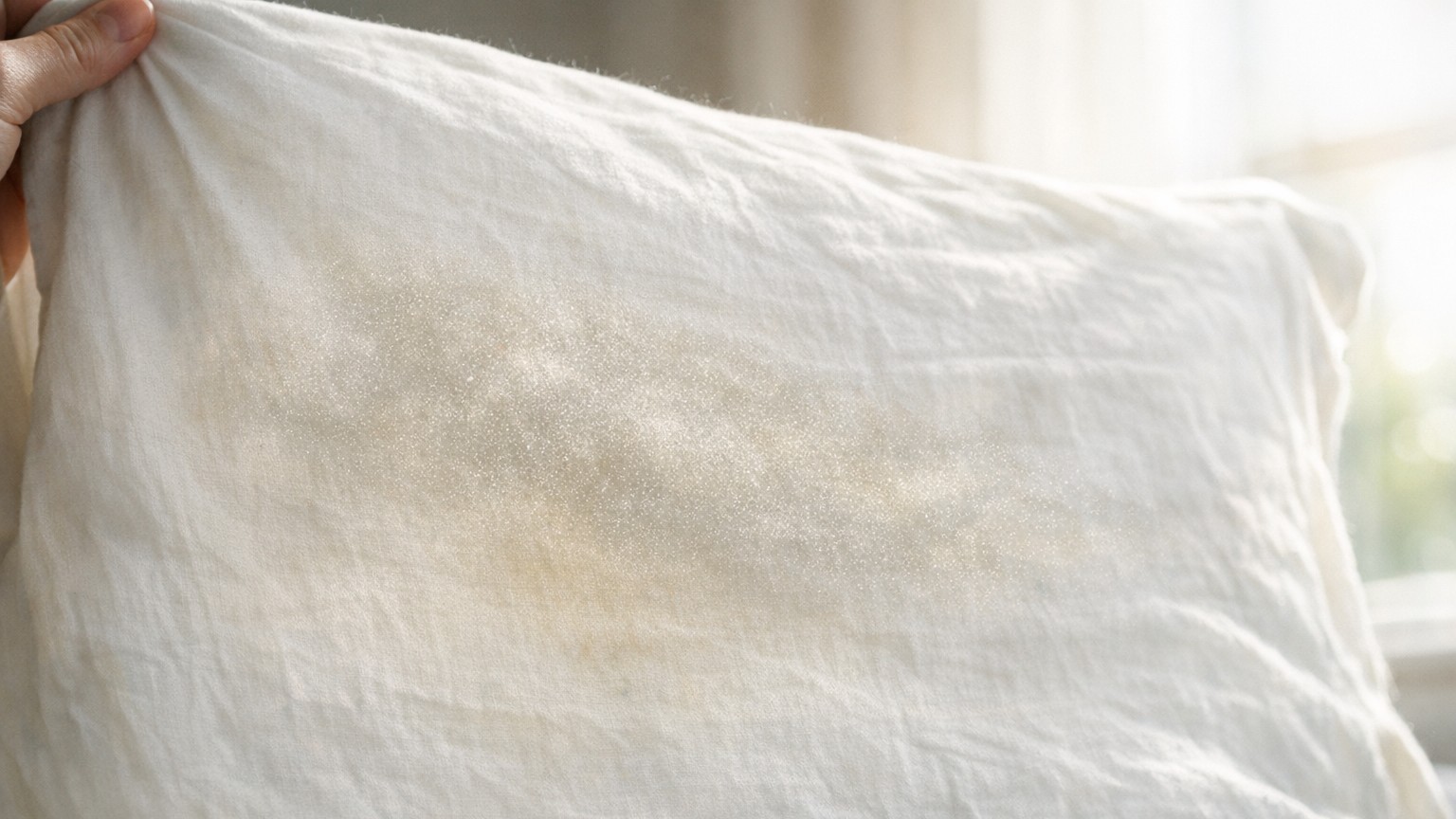
The logic felt airtight. Lower temperature, less energy, a smaller carbon footprint, virtuous on every count. For years, the 30°C cycle was the eco-conscious default for sheets, an easy habit that felt responsible. Then came an offhand comment from a dermatologist who glanced at a pillowcase, and the whole narrative unraveled.
The problem is not that cold washing is wrong, exactly. The problem is that bedding is not a T-shirt.
Key takeaways
- You shed 500 million skin cells daily and produce 200ml of sweat nightly—all collecting on your pillowcase
- Washing at 30°C kills only 6.5% of dust mites, while 60°C kills them all
- That ‘fresh-smelling’ pillowcase from a cold wash is microbiologically deceptive
What Is Actually Living on Your Pillowcase
You shed about 500 million skin cells per day, many of which end up in your bed, while the average person produces up to 200ml of sweat per night. Every single night. That warm, humid microenvironment pressing against your face for seven or eight hours is not neutral, dust mites thrive in humid environments, feeding on skin cells, while bacteria including Staphylococcus aureus can build up shockingly fast.
Cotton pillowcases absorb natural oils, sweat, skincare residue, and bacteria. That buildup presses against your skin nightly, leading to clogged pores, breakouts, and irritation. If you follow a careful skincare routine at night, serum, moisturizer, the works, and then sleep on a pillowcase that has been accumulating this cocktail for two weeks, those contaminants can eventually circle back to clog pores, causing acne, irritation, and dull skin tone. They can undo your whole nightly skincare routine just by lying there.
The bacteria angle is where things get truly uncomfortable. Research from mattress company Amerisleep found that unwashed bedding can harbor bacteria levels comparable to some of the dirtiest surfaces we encounter daily. Some bacteria found include gram-negative rods, which may cause antibiotic resistance and infections, and Bacilli, known for food poisoning. A pillowcase you haven’t changed in three weeks is, microbiologically speaking, a very different object than it appears.
The 30°C Lie, and What the Science Actually Says
Here is the counter-intuitive part that most eco-laundry messaging glosses over: washing at lower temperatures such as 30°C or 40°C may clean dirt and odours, but it won’t reliably kill mites or remove allergens. The issue is not just about what gets cleaned off, it’s about what survives the wash cycle entirely and keeps reproducing.
Using the 30°C and 40°C washing modes, only 6.5% and 9.6% of house dust mites were killed respectively. However, using the 60°C and steam water modes, all dust mites were killed. This data comes from a peer-reviewed study comparing allergen removal across four wash temperatures. Washing at lower temperatures will temporarily wash the allergen away because dust mite allergen dissolves in water. However, any mites that survive will simply begin producing more allergen within a short period.
So you run your gentle 30°C eco-cycle. The sheets smell fresh. You feel virtuous. But a significant portion of the mite population has simply ridden out the spin cycle and is ready to get back to business. The reset is cosmetic, not biological.
Dust mites don’t bite, but the proteins in their droppings are among the most common triggers of allergic reactions and respiratory symptoms in the bedroom. The Centers for Disease Control and Prevention cautions that if you have asthma and are allergic to dust mites, they can also trigger asthma attacks. For anyone waking up congested, sneezy, or with mysterious morning skin flare-ups, your laundry routine may be one factor worth reviewing.
The Smarter Compromise
The goal is not to make you feel guilty about caring for the environment. Heating the water accounts for 90 percent of the energy used by a washing machine, so using cold water drastically reduces the impact per load. That is a real and significant saving, for clothes, for everyday linens, for items that don’t spend eight hours pressed against your skin and immune system. The error is applying the same logic to bedding, which operates under entirely different hygiene stakes.
The practical solution most dermatologists and allergists land on: a tiered approach. Wash at 60°C or higher with detergent to kill bacteria and dust mites. Wash sheets and pillowcases weekly at 60°C or above where the fabric allows. For those with allergies, asthma, eczema, or persistent skin issues, the regime should include weekly 60°C washes for all sheets and pillowcases, monthly 60°C washes for mattress protectors, and the use of allergen-barrier covers over mattresses, pillows and duvets.
For delicate fabrics that can’t tolerate high heat, there are alternatives. To target dust mites inside pillows, freeze for at least 8 hours. Tumble drying on a high heat setting for at least 30 minutes further Eliminates any remaining mites or moisture. Sunlight is another natural ally : UV exposure helps kill bacteria and mites, which is why line-drying bedding outdoors on a sunny day offers genuine hygienic benefits beyond simply getting things dry.
One detail that rarely makes it into the laundry conversation: consider leaving your bed unmade for at least a little while in the morning. Give sweaty sheets a chance to dry before pulling up your comforter, as this will reduce the moisture that dust mites and bacteria need to flourish. A simple act of apparent laziness that is, in fact, the hygienic choice.
The real takeaway is not that cold washing is bad, it’s that bedding deserves its own category entirely, separate from the rest of your laundry. Pillowcases collect dead skin cells, oils, sweat, and environmental dirt, and if not washed regularly, these become breeding grounds for bacteria that disrupt your skin microbiome. A study published in the Journal of Clinical and Aesthetic Dermatology found that regularly changing pillowcases reduced acne severity in participants. Your skin spends a third of its life against that fabric. What temperature you choose to wash it at is, it turns out, a skin-health decision as much as an energy one.
Sources : bugwisepestcontrol.co.uk | zeenews.india.com