
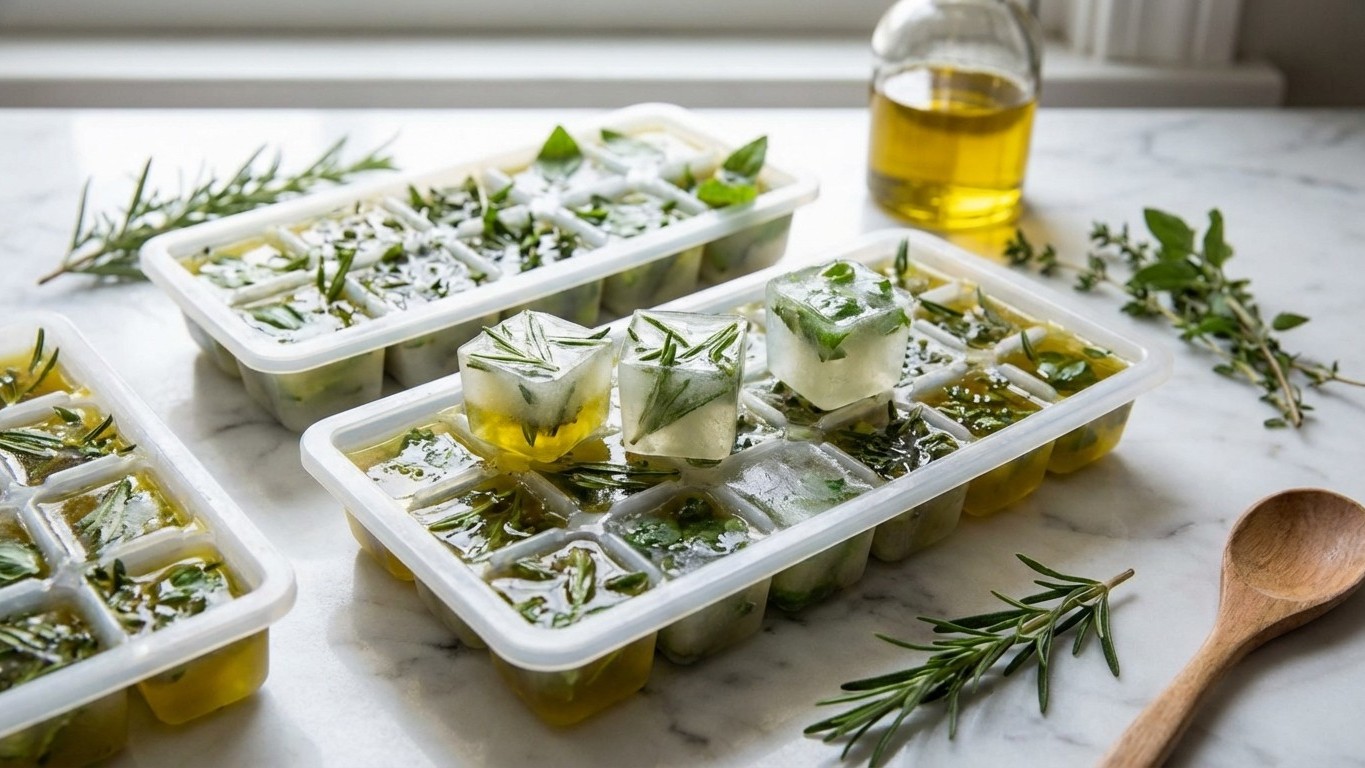
Standing in my kitchen last Tuesday, staring at a bundle of basil that had seen better days, I was about to commit the ultimate culinary sin: tossing those droopy green leaves straight into the trash. The guilt was real – those herbs had cost me nearly eight dollars at the farmers market, and here they were, looking defeated after just three days in my refrigerator. But then I remembered the ice cube tray sitting in my freezer drawer, and everything changed.
Actually-lengthens-lashes”>Technique“>this simple revelation has revolutionized how I approach Fresh Herbs in my kitchen. Instead of racing against time to use every sprig Before it wilts, I Now have a strategic preservation Method-doubles-your-storage-in-a-narrow-hallway”>method that Actually-do-with-it”>actually enhances my cooking routine. The beauty lies not just in reducing waste, but in creating convenient, portion-controlled flavor bombs that are ready whenever inspiration strikes.
The Science Behind Freezing Fresh Herbs
When herbs begin to wilt, they’re not necessarily losing their flavor – they’re simply losing moisture and structural integrity. The essential oils that give herbs their distinctive taste and aroma remain largely intact, even as the leaves start to droop and darken. Freezing captures these oils at their peak, essentially putting them in suspended animation until you’re ready to release their full potential.
The ice cube method works particularly well because it prevents freezer burn while maintaining the herbs’ cellular structure. Unlike simply tossing loose herbs into a freezer bag where they can become a clumped, frost-covered mess, the ice cube approach creates individual portions that thaw cleanly and maintain much of their original character.
Different herbs respond uniquely to this preservation technique. Soft herbs like basil, parsley, cilantro, and dill freeze beautifully and retain remarkable flavor intensity. Heartier herbs such as rosemary, thyme, and oregano maintain their potency exceptionally well, often tasting nearly as vibrant as their fresh counterparts when used in cooked dishes.
Mastering the Ice Cube Preservation Technique
The process begins with proper preparation of your herbs, regardless of their current condition. Even If Your herbs look past their prime, give them a gentle rinse under cool water and pat them completely dry with paper towels. Any residual moisture beyond what you’ll intentionally add can create ice crystals that damage the herb’s cellular structure.
Chopping technique matters more than you might expect. For most herbs, a rough chop works perfectly – you want pieces small enough to fit comfortably in your ice cube compartments but large enough to maintain some texture. Think of it as prepping herbs for a rustic sauce rather than creating a fine mince.
The oil method offers an additional advantage – it helps preserve the herbs’ color more effectively than water, resulting in vibrant green cubes that look as good as they taste. Extra virgin olive oil works wonderfully, but any neutral oil will do the job if you prefer not to add olive oil’s distinctive flavor profile to every dish.
Creative Applications Beyond Basic Cooking
Once you start thinking of these herb cubes as culinary building blocks rather than Simple preservation tools, their versatility becomes truly exciting. A single basil-oil cube can transform a basic tomato soup into something restaurant-worthy. Drop a parsley-water cube directly into your rice while it’s cooking for an instant flavor upgrade that permeates every grain.
The convenience factor cannot be overstated. When you’re making a quick weeknight dinner and need fresh herb flavor, simply grab a cube or two from the freezer. There’s no washing, chopping, or measuring required – just instant flavor enhancement that tastes like you spent far more effort than you actually did.
These cubes also excel in slow-cooking applications. Add them to your slow cooker meals during the last hour of cooking, or drop them into simmering sauces where they’ll melt seamlessly and distribute their concentrated flavor throughout the dish. The controlled portions mean you’re less likely to over-herb your food, a common mistake when working with fresh herbs.
Storage and Long-Term Strategy
Proper storage extends the life and quality of your herb cubes significantly. Once frozen solid, transfer the cubes to labeled freezer bags, squeezing out as much air as possible before sealing. This prevents freezer burn and allows you to mix and match different herb varieties Without cross-contamination of flavors.
Dating your bags helps maintain quality control – while herb cubes can last several months in the freezer, they’re at their absolute best within the first six to eight weeks. Create a simple rotation system, using older cubes before newer ones to ensure you’re always cooking with optimal flavor.
This preservation method has transformed my relationship with fresh herbs entirely. No longer do I hesitate to buy that gorgeous bunch of cilantro or splurge on expensive fresh basil. I know that every leaf will be used purposefully, either fresh in the moment or preserved for future culinary adventures. The next time you find yourself with herbs approaching their wilted destiny, remember that an ice cube tray might just be their salvation – and your secret weapon for effortless, flavorful cooking.