
Standing in that overcrowded thrift store, surrounded by racks of pre-loved clothing, I was ready to walk away empty-handed for the third time that month. Every piece I’d fallen for had the same heartbreaking story: gorgeous from a distance, but riddled with issues that would cost more to fix than the garment was worth. That’s when Maria, a seamstress with forty years of experience, tapped me on the shoulder and whispered, “You’re looking at Actually-flatters-your-face”>the wrong seams.”
What she showed me next completely revolutionized how I approach secondhand shopping. Instead of the obvious checks most of us do—looking for stains, holes, or Missing“>Missing“>Missing buttons—Maria taught me to examine the structural integrity through what she calls “stress point analysis.” This Technique has saved me hundreds of dollars and transformed me into a confident thrift shopper who rarely makes a purchasing Mistake-everyone-makes-when-choosing-a-sofa-bed”>Mistake.
The Hidden Language of Seam Stress
Maria’s revelation was surprisingly simple yet profound. While most shoppers focus on surface-level damage, experienced seamstresses know that a garment’s true condition lies in how its seams have weathered wear and washing. She guided my fingers to the armpit seam of a beautiful vintage blazer I’d been considering. “Feel that,” she instructed. “The fabric is pulling apart from the inside, but you can’t see it because the outer threads are still intact.”
This phenomenon, which she calls “invisible deterioration,” occurs when the inner threads of a seam break down before the outer ones. The garment looks perfect from the outside, but one good stretch or wash cycle will cause catastrophic failure. Maria Explained that certain areas of any garment experience the most stress: armholes, crotch seams, shoulder seams, and the area where sleeves attach to the body. These are the make-or-break zones that determine whether a thrift find will last years or fall apart after one wear.
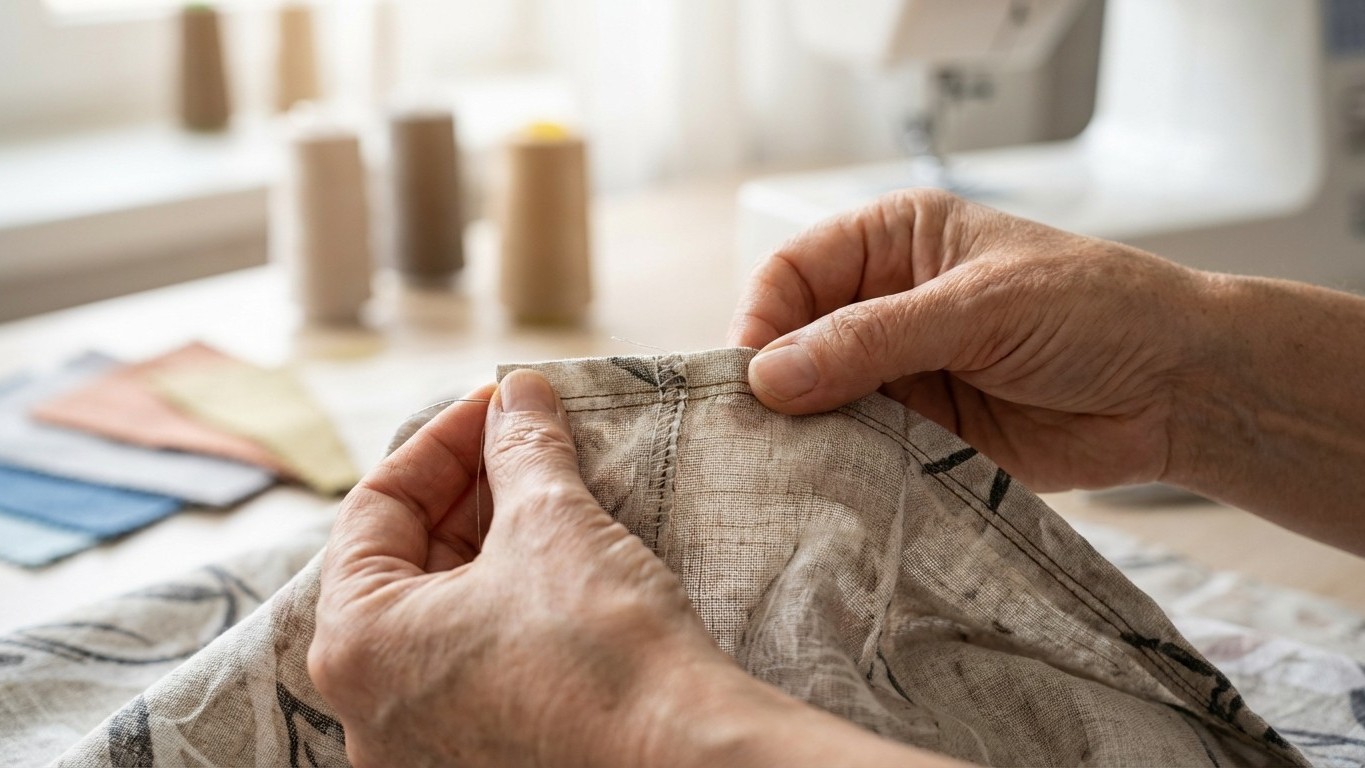
The technique itself is elegantly simple. Hold the garment up to natural light and gently stretch each stress point seam. Look for tiny separations between threads, areas where the fabric appears thinner, or sections where the seam allowance has frayed internally. Run your fingers along these seams, feeling for roughness or areas where threads catch. A healthy seam should feel smooth and uniform, with no give or weakness when gently stretched.
Reading the Signs of Seam Success
Beyond the basic stress test, Maria taught me to recognize the hallmarks of quality construction that indicate a garment will age gracefully. French seams, where raw edges are encased within the seam itself, are gold standard indicators of thoughtful construction. Overlock or serged edges show that someone cared about preventing fraying. Even simple pinked edges suggest attention to detail that mass-produced items often lack.
She also revealed the importance of thread quality in assessing long-term durability. High-quality thread has a subtle sheen and feels smooth between your fingers, while cheap thread appears dull and may feel rough or fuzzy. When you find a garment constructed with superior thread, you’ve likely discovered-what-italian-grandmothers-have-always-known”>discovered a piece that was made to last. The investment in quality materials extends throughout the construction process.
The Economics of Smart Thrift Shopping
Understanding seam integrity has completely Changed My thrift shopping economics. Before learning Maria’s technique, I was essentially gambling with Every Purchase. I’d buy items based on their appearance and price, only to discover costly problems later. A five-dollar shirt that needed fifteen dollars worth of seam repair wasn’t really a bargain. A ten-dollar dress that fell apart after one wash was money thrown away.
Now, I approach thrift shopping with the confidence of an informed buyer. I can quickly assess whether a garment is structurally sound and likely to last, or if it’s on the verge of failure despite looking perfect. This knowledge has led me to pass on many superficially attractive pieces that would have been expensive mistakes, while confidently investing in items that might look less perfect but have solid construction.
The time investment in learning this skill pays dividends immediately. What once required lengthy deliberation over every potential purchase now takes just minutes of focused examination. I can quickly scan the stress points, assess the construction quality, and make an informed decision. This efficiency has made thrift shopping enjoyable again, rather than the anxious guessing game it had become.
Building Your Thrift Shopping Confidence
The beauty of Maria’s seam trick lies in its universal application. Whether you’re shopping for everyday basics or hunting for vintage treasures, understanding structural integrity Transforms you from a hopeful gambler into a knowledgeable curator. You begin to develop an eye for the subtle signs of quality that separate lasting pieces from temporary fashion.
This knowledge also opens up new possibilities within thrift shopping. When you can accurately assess a garment’s condition, you might discover that a piece with minor visible flaws but solid construction Actually-solid”>Is Actually a Better investment than something that looks perfect but is structurally compromised. You learn to see past surface imperfections to the bones of good design and construction.