
After Years of watching my beautiful stainless steel sink lose its luster despite aggressive scrubbing with commercial cleaners, I discovered that the very products I thought were helping were Actually-flatters-every-body-type-according-to-stylists-and-why-it-s-not-what-you-think”>Actually-offers”>Actually causing microscopic scratches that dulled the surface. The game-changing revelation came when I learned that the secret to restoring that showroom shine lies not in harsh abrasives, but in understanding the science of stainless steel maintenance.
The breakthrough moment happened during a conversation with a Professional kitchen installer who shared a trade secret that completely transformed my approach to sink care. Instead of fighting against the material’s natural properties, this Method works with them to create a protective barrier that not only restores shine but maintains it longer than any commercial cleaner ever could.
Why Traditional Cleaners Actually Damage Your Sink
Stainless steel derives its beauty from its smooth, uniform surface that reflects light evenly. When we use abrasive cleaners, scouring pads, or even seemingly gentle scrubbing motions, we create tiny scratches that scatter light in different directions. This light scattering is what creates that dull, cloudy appearance that makes even clean sinks look dirty and worn.
The irony is that most commercial stainless steel cleaners contain mild abrasives designed to cut through grease and grime. While they may remove surface dirt effectively, they simultaneously create the very problem they claim to solve. Each cleaning session adds more microscopic scratches, gradually transforming your once-gleaming sink into a lackluster fixture that seems impossible to restore.
Professional chefs and restaurant owners learned long ago that the key to maintaining stainless steel’s appearance lies in gentle, consistent care rather than aggressive cleaning. The foodservice industry relies on stainless steel not just for its hygienic properties, but for its ability to maintain an attractive appearance under constant use when properly maintained.
The simple Restoration Method that changes everything
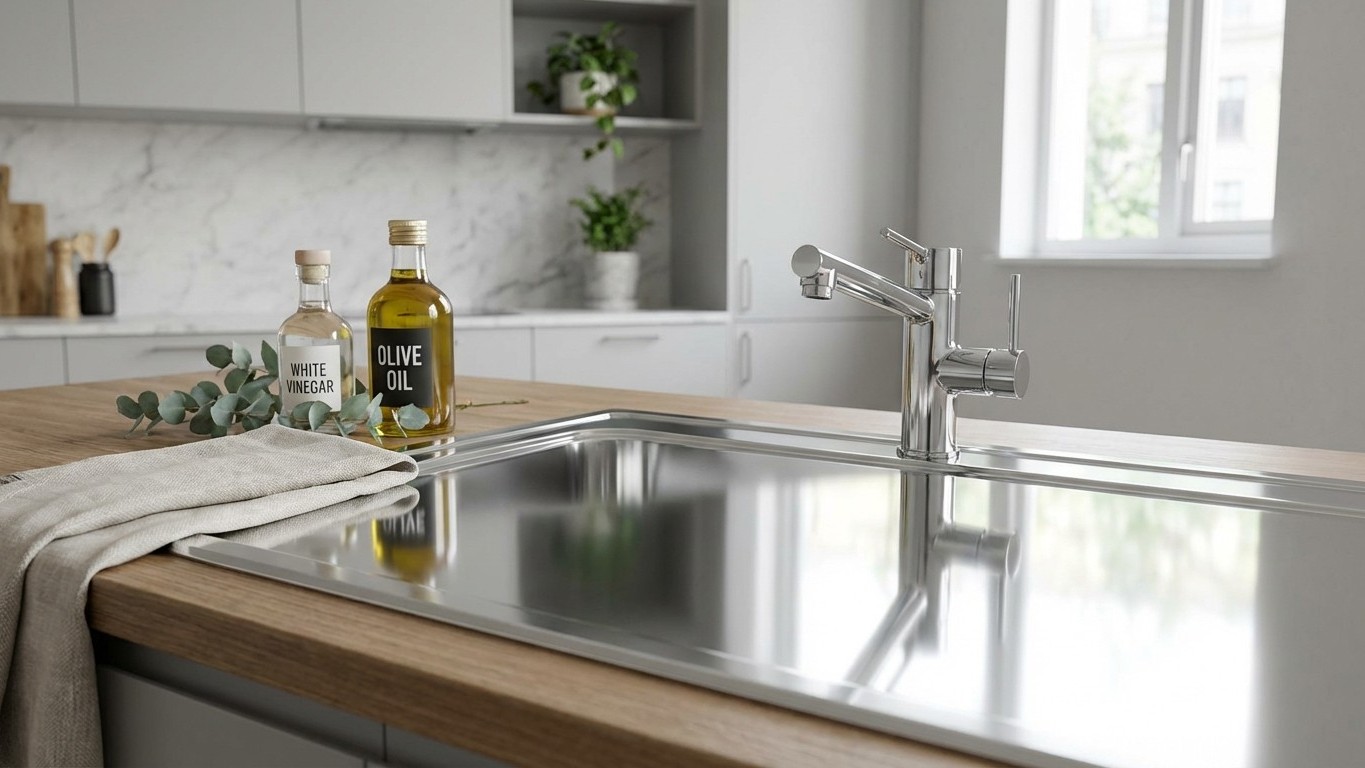
The technique that revolutionized my sink maintenance routine requires just two common household items: white vinegar and olive oil. This combination works through a two-step process that first removes mineral deposits and water spots, then creates a protective layer that enhances shine and repels future staining.
The process begins with white vinegar, whose mild acidity dissolves calcium and lime deposits that cloud the steel’s surface. Unlike harsh chemicals that attack the metal itself, vinegar specifically targets the mineral buildup while leaving the steel unharmed. The key is Applying the vinegar with a soft cloth in long, smooth strokes that follow the grain of the steel, never against it.
After the vinegar treatment removes all mineral deposits and restores the steel’s natural clarity, a thin application of olive oil creates a protective barrier that enhances the metal’s reflective properties. The oil fills in microscopic imperfections and creates a uniform surface that reflects light beautifully while providing ongoing protection against water spots and fingerprints.
What makes this method particularly effective is its gentleness. Instead of removing material from the sink’s surface like abrasive cleaners do, this approach adds protection while working with the steel’s natural properties. The result is not just immediate improvement, but cumulative benefits that become more apparent with each application.
Maintaining That Mirror-Like Finish
The transformation isn’t just about the initial restoration—it’s about establishing a maintenance routine that keeps your sink looking professionally polished with minimal effort. Daily care becomes remarkably simple when you’re working with the material rather than against it.
Regular maintenance involves nothing more than wiping down the sink with a soft, dry cloth after each use to prevent water spots from forming. Weekly treatments with the vinegar and oil method maintain the protective barrier and address any minor dulling Before it becomes noticeable. This proactive approach prevents the accumulation of damage that leads to the need for aggressive restoration methods.
The economic benefits are equally impressive. Eliminating expensive specialty cleaners and replacing them with common household items reduces cleaning costs significantly. More importantly, preserving the sink’s original finish prevents the need for costly refinishing or replacement that often results from years of abrasive cleaning damage.
Environmental considerations also favor this gentle approach. Reducing reliance on chemical cleaners benefits both indoor air quality and water systems. The natural ingredients break down safely and don’t contribute to the chemical load that affects both household and municipal water treatment systems.
Beyond the Sink: Applying This Philosophy
This revelation about gentle care extends beyond kitchen sinks to all stainless steel appliances and fixtures throughout the home. Refrigerators, dishwashers, and range hoods all benefit from the same philosophy of working with the material’s properties rather than against them. The consistent application of gentle, protective maintenance creates a cohesive aesthetic throughout the kitchen while reducing overall maintenance time and cost.
The transformation in my approach to stainless steel care taught me that sometimes the most effective solutions are also the simplest. By abandoning the assumption that effective cleaning requires harsh chemicals and aggressive scrubbing, I discovered a method that delivers superior results with less effort and expense. My sink now maintains a consistent, mirror-like finish that enhances the entire kitchen’s appearance while requiring just minutes of weekly attention.