
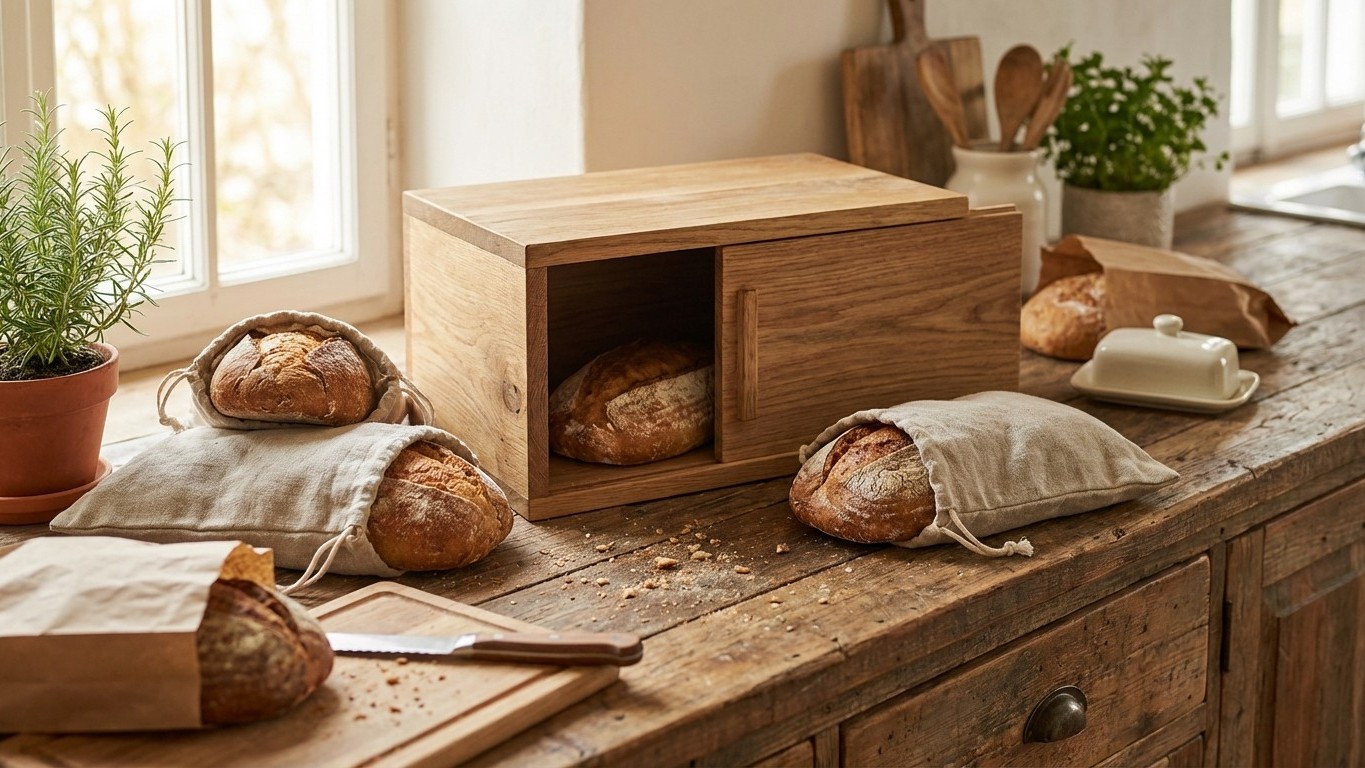
For years, I religiously wrapped my artisanal sourdough and fresh bakery loaves in plastic wrap, thinking I was doing everything right. The bread would go stale within two days, develop a soggy crust, or worse, start showing signs of mold. Then I discovered something that completely changed my bread game: plastic is actually the enemy of fresh bread, not its protector.
The revelation came during a conversation with my local baker, who mentioned that plastic creates the perfect storm for bread deterioration. While we’ve been conditioned to think airtight equals fresh, bread actually needs to breathe. That plastic wrap you’ve been using? It’s trapping moisture, creating a humid microenvironment that accelerates staleness and encourages mold growth.
Understanding the Science Behind Fresh Bread Storage
Bread staling isn’t just about losing moisture – it’s a complex process called retrogradation, where starch molecules reorganize and crystallize. When bread is wrapped in plastic, the trapped moisture actually speeds up this process rather than preventing it. The humid environment also creates ideal conditions for mold spores to flourish, explaining why plastic-wrapped bread often develops those unwelcome green spots.
Fresh bread has a delicate balance of moisture content and air circulation needs. The crust serves as a natural protective barrier, but only when it can maintain its integrity. Plastic wrap softens the crust by trapping steam, eliminating one of bread’s built-in preservation mechanisms. This is why bakery bread often comes in paper bags – professional bakers Understand that bread needs to breathe.
The temperature factor is equally important. Plastic-wrapped bread experiences temperature fluctuations more dramatically, as the plastic creates a greenhouse effect. These temperature swings further accelerate the staling process and create condensation that feeds mold growth.
The Game-Changing Storage Methods That Actually Work
After abandoning plastic, I experimented with several storage methods before finding the winners. The most effective approach depends on your bread type and consumption timeline, but the results consistently outperformed plastic wrapping.
For crusty artisanal breads like sourdough, baguettes, or rustic loaves, I Discovered that a simple cloth bread bag works miracles. These breathable fabric bags, often made from linen or cotton, allow air circulation while protecting the bread from excessive drying. The cloth absorbs excess moisture without creating the humid trap that plastic does. My sourdough now stays fresh and maintains its crispy crust for up to five days, compared to the two days I got with plastic.
Paper bags offer another excellent solution, particularly for bread you’ll consume within a few days. The paper absorbs moisture while allowing the bread to breathe, maintaining that perfect balance. I’ve found that doubling up paper bags – placing the bread in one bag, then putting that bag inside another – creates an ideal microenvironment for most bread types.
For longer-term storage, the freezer becomes your best friend, but the Method matters. Instead of plastic wrap, I use aluminum foil or freezer paper, which Prevents freezer burn while allowing the bread to maintain its texture. When properly wrapped in foil, bread can stay fresh in the freezer for up to three months and tastes nearly identical to fresh bread when thawed and briefly warmed.
Adapting Your Storage Strategy to Different Bread Types
Not all breads behave the same way, and I learned that storage methods need to match the bread’s characteristics. Enriched breads with eggs, butter, or milk have different needs than lean breads made with just flour, water, yeast, and salt.
Soft sandwich breads and enriched breads actually benefit from a hybrid approach. I store them in bread boxes or containers with loose-fitting lids that allow some air circulation without completely exposing the bread. The key is avoiding both the moisture trap of plastic and the complete exposure that might dry out these softer breads too quickly.
Dense, hearty breads like rye or pumpernickel have more resilience and can handle simple cloth bag storage beautifully. These breads often improve slightly over the first day or two as their flavors develop and moisture distributes evenly throughout the loaf.
Quick breads and sweet breads require special attention since they often contain fruits, nuts, or other ingredients that affect moisture levels. For these, I use loose paper wrapping combined with storage in a cool, dark place, Checking regularly for any signs of spoilage.
The Surprising Benefits Beyond Freshness
Eliminating plastic from my bread storage routine brought unexpected advantages beyond just longer-lasting freshness. The environmental impact felt significant – no more single-use plastic wrap heading to the landfill every few days. My reusable cloth bags have lasted over a year and still look nearly new.
The financial benefits surprised me too. With bread staying fresh twice as long, I’m throwing away far less food and making fewer emergency trips to the bakery. The initial investment in quality cloth bags paid for itself within a month.
Perhaps most importantly, my bread actually tastes Better. The crust maintains its intended texture, whether crispy or chewy, and the crumb stays moist without becoming gummy. I’m Finally experiencing bread the way bakers intended it to be enjoyed.
Making this simple switch transformed my relationship with fresh bread from a race against time to a leisurely enjoyment of quality food that stays delicious for days. The solution was hiding in plain sight – sometimes the old ways really are the best ways.